Paid Social Ads / Field guide
Facebook and Instagram Ads for Local Businesses: A Practical Guide (2026)
 Kate
Published · Updated
How local businesses get enquiries from Facebook and Instagram ads: targeting your real service area, a five-creative starter set, lead forms vs landing pages, an 8-week rotation plan and fast follow-up.
When Facebook and Instagram ads work for local businesses
Most people near your business aren't searching for you right now. They're scrolling Instagram on the bus or checking Facebook after dinner. Meta ads reach them there with a photo or video that shows what you do and a simple way to get in touch.
These ads work best when you can show the result and create demand people didn't know they had. A smile makeover, a renovated kitchen or a new menu is easy to show in a few seconds. "Accounting services" is harder.
Mostly left: Meta ads are a strong first channel. Mostly right: start with Google Ads, SEO or referrals.
How Meta ads differ from Google Ads
Google Ads catch people who are already searching. Meta ads interrupt people who aren't, so the ad has to create the interest itself. They work at different moments of the same customer journey:
- ComparingChecks reviews, asks friendsboth
- Searching"whitening near me price"Google
- BookingCalls or books onlineGoogle
Many local businesses run both: Meta to make nearby people aware of them, and Google to catch those same people when they later search.
Reaching people near you
Set the location to the area customers will realistically travel from, then keep everything else broad. Meta's delivery system is usually better at finding likely customers than a narrow list of interests, especially in a small area where narrow targeting leaves too few people to learn from.
- 2–3 kmCafé, barber, gym
- 5–8 kmDentist, beauty clinic, physio
- 15+ kmRenovation, wedding venue, specialist surgery
- Location
- Radius or the districts you serve; "people living in or recently in"
- Age & gender
- Leave open unless your service is truly limited
- Interests
- Few or none; let delivery find buyers
- Language
- Only if the ad copy needs it
Radii are typical starting points, not rules. Use realistic travel time in your city: 5 km across a river can feel like 20.
Creative that gets attention
On Meta, the creative does most of the targeting work. The right image or video attracts the right people and tells everyone else to keep scrolling. For local businesses, real people and real places win, because stock photos look like ads.
4Whitening in Podil — 3,500 UAH until the end of the month.
- 1Hook in the first 2 secondsMovement or a face, not a logo
- 2Real people and placeYour team, your room: stock looks like an ad
- 3Captions on screenMany people watch without sound
- 4A concrete offerPrice, time limit or first-visit deal
- 5One clear next step"Book this week", not "Learn more"
Start with three to five different creatives rather than five versions of one idea. Here's a set most local businesses can shoot on a phone in an afternoon:
- What it is
- Phone video of a real procedure or job, captioned
- Why it works
- Shows skill and the place; builds trust
- What it is
- One common question answered to camera
- Why it works
- A face people recognise in the street
- What it is
- A real review as a quote card, or a short clip
- Why it works
- Social proof from a neighbour
- What it is
- Price, what’s included, deadline, one button
- Why it works
- Converts people already warmed up
- What it is
- Setting up in the morning, a new tool, the space
- Why it works
- Cheap to make; keeps the feed fresh
All five can be shot on a phone in one afternoon. Clinics: check Meta’s Advertising Standards on health claims and before/after images first.
Health, beauty and clinic businesses need extra care. Meta's Advertising Standards don't allow ads that assert or imply someone's personal attributes, including health conditions, and they restrict before-and-after images for some treatments. In practice:
- Don't: "Embarrassed by your yellow teeth?" (implies a personal attribute)
- Do: "Teeth whitening in Podil — from 3,500 UAH, one visit"
Check the current standards before you design the ads, not after they're rejected.
Lead forms vs landing pages
Instant lead forms usually bring more leads at a lower cost per lead. Landing pages usually bring fewer, better-qualified ones. The right choice depends mainly on how fast you can follow up.
If you use lead forms, choose the "Higher intent" form type in Ads Manager, which adds a review step before submitting, and add one qualifying question such as which service they're interested in. Both cut down accidental and low-quality submissions.
Budgets and testing
Start with a budget you can sustain for three to four weeks while you test, then put more behind what works.
- Pick one goal: enquiries or bookings, not awareness, leads and traffic at once.
- Run three to five creatives with the same audience and offer, so the creative is the only thing being tested.
- Don't touch it for the first week. Meta's delivery needs time to learn; daily edits restart that learning.
- Judge after enough results: a few days and a handful of leads isn't enough. Look at cost per lead, then at how many leads became customers.
- Keep the winners, replace the losers with new variations of what worked.
If the budget only allows a trickle of leads a week, narrow to one service and one offer rather than spreading it across several.
Our take: plan for creative fatigue from day one
In a small area, the same people see your ads again and again, so creative wears out much faster than in national campaigns. That's why we plan a steady supply of new creative before launch, rather than waiting until results drop. A typical plan looks like this:
| W1 | W2 | W3 | W4 | W5 | W6 | W7 | W8 | |
|---|---|---|---|---|---|---|---|---|
| C1Team video | ||||||||
| C2Specialist | ||||||||
| C3Review | ||||||||
| C4Offer | ||||||||
| C5Behind scenes | ||||||||
| C6New team video | ||||||||
| C7New review | ||||||||
| C8New offer | ||||||||
| C9Fresh angle |
- C1 Team video
- C2 Specialist
- C3 Review
- C4 Offer
- C5 Behind scenes
- C6 New team video
- C7 New review
- C8 New offer
- C9 Fresh angle
testingwinner, keptoff
Every two weeks the weakest two are switched off and replaced with new versions of what worked. Example plan; your cadence depends on how fast frequency rises.
You don't have to guess when it's time to refresh. Fatigue shows up in two numbers you can watch side by side:
- Frequency above ~3 a week in a small radius
- Cost per lead rising two weeks in a row
- Comments like "this ad again"
Illustrative pattern. In Ads Manager, add the Frequency column next to cost per lead and watch them together weekly.
Tracking and follow-up
Track every enquiry back to the ad that produced it, and reply fast. Without tracking you can't tell which creative brings customers. Without fast follow-up, good leads go cold, and Meta leads go cold faster than most because people weren't actively looking.
- 1Lead arrivesForm or message from the adInstant alert to phone/Telegram, not just email
- 2First contactCall within minutes, while they remember the adOpen with the offer they saw: "You asked about whitening…"
- 3No answerMessage, then try again the same dayThree attempts over 48 hours before closing
- 4Qualify & bookService, timing, location fitBook a specific slot on the call
- 5Record the outcomeBooked / no-show / customer, in the CRMSend results back to Meta (Conversions API) so it finds more like them
On the tracking side: install the Meta Pixel on your website, add the Conversions API for more reliable data, and record which leads became customers so you can judge ads by cost per customer, not just cost per lead.
Example: a dental clinic
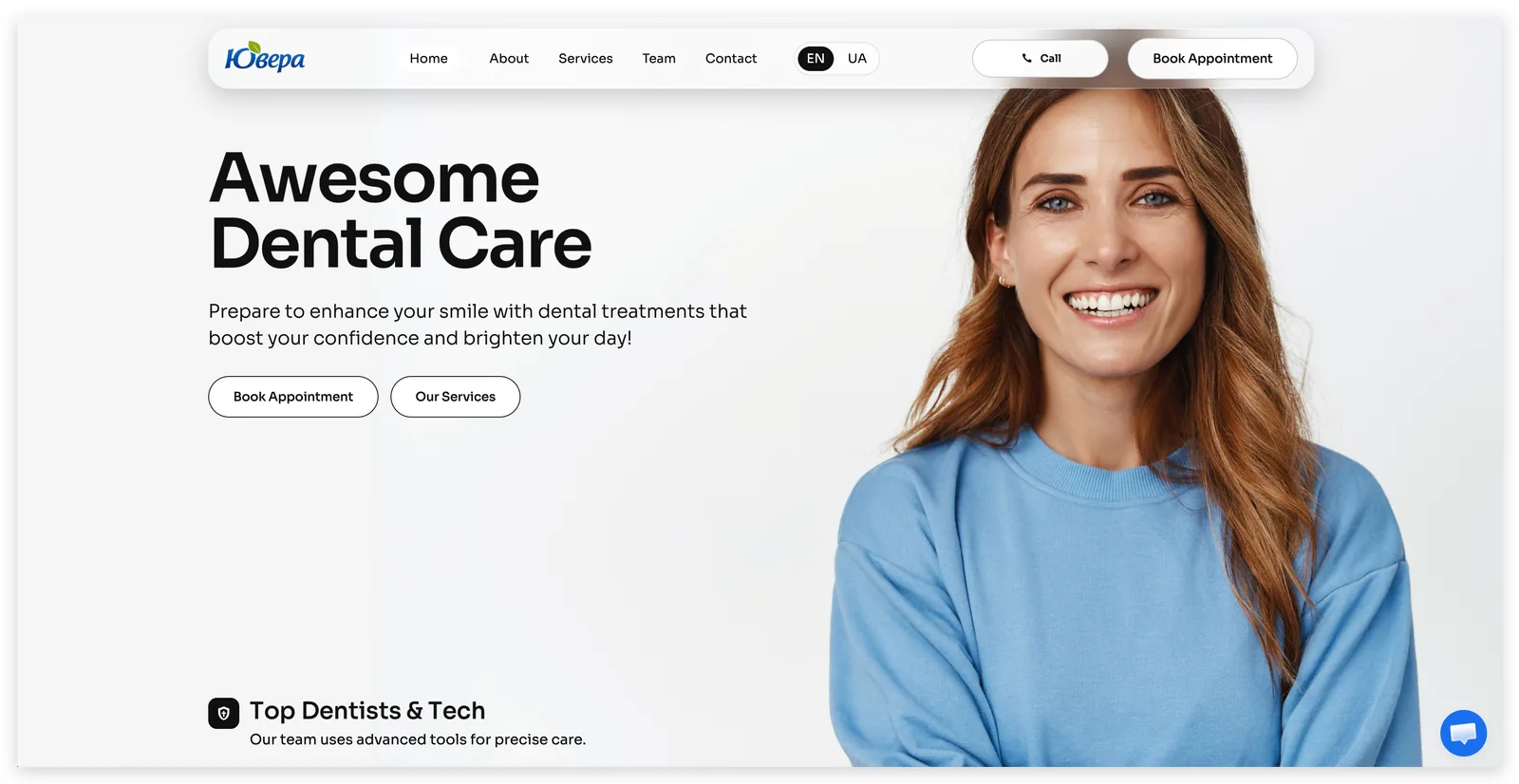
We built the website and ran Facebook ads to bring in patient leads. Why a clinic is a textbook fit for Meta:
- Personal, visual service
- Patients choose a clinic near home
- Most don’t search until something prompts them
Key takeaways
- Meta ads reach people who aren't searching yet, so the creative has to do the work.
- Target your real service area with a radius or districts, and keep other targeting broad.
- Start with five different creatives featuring real people and places, with a concrete offer and one next step.
- Choose lead forms or a landing page based on how fast you can follow up, and call new leads within minutes.
- Plan new creative from day one: small local audiences tire of ads quickly. Watch frequency and cost per lead together.